Make an enquiry
Different Snow

OUR ❤️️ FOR MYOKO KOGEN, JA’POW WITHOUT THE HYPE

Myoko Kogen might just be our favourite ski resort in Japan. Incredible powder, no crowds, and a truly authentic experience, this is skiing Japan at its best.

OUR ❤️️ FOR MYOKO KOGEN, JA’POW WITHOUT THE HYPE

Here at Different Snow we noticed, since the pandemic years, that we have been including Myoko Kogen in the itinerary more often. I have always been a fan and for many years I have considered Mount Myoko as one of my favourite ski mountains in Japan, since I first skied here in the Noughties. And it is perhaps because it has not developed at the same pace as its nearby rivals – most notably Nozawa Onsen and the Hakuba Valley – that it has come back in to focus as one of our go-to options for those who seek that perfect combination of out-of-this-world skiing and an authentic Japanese experience.

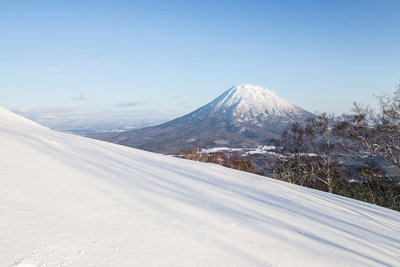
‘Myoko’ refers to Mount Myoko, a huge active stratovolcano in Niigata Prefecture, and a part of Jōshin'etsu-kōgen National Park. ‘Kogen’ means highlands in Japanese. On the flanks of the mountain are several ski resorts – Akakura Onsen, Akakura Kogen, Suginohara (let’s just call it "Sugi"), and Ikenotaira – and collectively we know these resorts, unified under one lift pass, as Myoko Kogen. You stay in a pleasantly ramshackle village called Akakura Onsen, which sits as the base of both Akakura resorts and then the other two are a short bus ride away, or a short drive with your guide. But your on-mountain experience is not limited to these ‘Myoko Kogen’ resorts (though it would be enough) as there is so much more to explore in the region, more on which later…

Myoko’s amazing powder record.

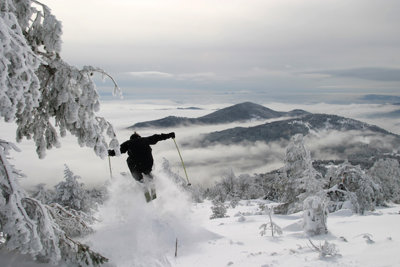
It snows A LOT. 16-metres plus of snow per annum and that’s at the base, not the higher elevations - is the average. That’s right up there in the mix as one of Japan’s snowiest ski resorts. All I know is that whenever I go to Myoko (which is most ski seasons) there just always appears to be more snow here than anywhere else.

This is because it is just 15 miles from the north-west coast of Honshu Island, and Mount Myoko is the first high ground to provide plenty of orographic lift, condensing the moisture into snow.

Myoko Kogen is famed for the abundant snow which results from its proximity to the Sea of Japan.

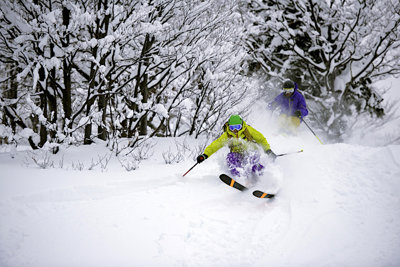
Now..if you search online you will find that few powder-snobs begin to make arguments about the quality of this abundant snow being not quite as good as what is more prevalent in Hokkaido with its drier snow crystals. All I can tell you? I’ve had some of the best powder days of my life in and around Myoko and often in years when Hokkaido was struggling to deliver those perfect conditions. Don’t ever believe it when some online 'specialist', who has likely only visited Japan once, telling you that the Myoko snow is ‘wetter & heavier’ – because it’s not, by any global standard. Quite the opposite – it’s light and powdery, the snow you came to Japan for! It’s just that some seasons it can be, arguably, not quite as dry, light, and fluffy as what is found in Central Hokkaido, for example. But it’s still JA’POW, the world's best snow.

Skiing in Myoko Kogen

The strength of Myoko isn’t each individual ski area – Akakura Kogen, Akakura Onsen, Sugi & Ikenotaira -  it’s the Myoko ski resorts combined. It is easy to get between them all using the local bus, though with a private ski guide then you’ve also got your own transport. Akakura Onsen and Akakura Kogen are linked on the mountain and this alone attracts 80% of visitors,  though the resort remains wonderfully dispersed. Queue up for a lift in Myoko Kogen? Unheard of. Fresh tracks? Fill your boots. There has been a slow battle raging over the years with the ski patrollers and their killjoy to off-piste fun, and they still don’t like you crossing under a lift line. But we’ve put in the hard yards and we’re winning  - they are now totally cool if you go into the sidecountry or backcountry via one of the gates. As always, take a guide.

Sugi is a must – think super long cruisy groomers and exceptional (utterly underrated) side country in amongst the trees. The best off-piste terrain is off the top lift, which is still below the tree line - yet has an elevation of 1,855 metres, so the snow quality is often superb. Lower down, next to the terrain park, can be equally good and its less steep so ideal for those making their first forays in to the good stuff.

Last time my colleague, Georgia, went to Sugi (early March 2025) she took the trip over on a Wednesday and had the entire resort to herself – well, she saw two snowboarders on a lift once, but that was it. It has laid down 25-cm of fresh powder the night previous. The perfect ski day was realised.

Ikenotaira Onsen is the ‘spare day; deep dive and it’s quite possible to have a lot of fun here – but it is more mellow and aims itself at intermediates learning to get off-piste. And for this, it is perfect – I still love it here and will make a day for Ikenotaira.

Access to nearby Arai, Madarao / Tangram & Seki Onsen

Beyond Mount Myoko itself is Mount Madarao to the south and Mount Okenashi to the north. If you basing yourself in Akakura Onsen village you are right slap-bang in the middle, and several other ski resorts are easily accessible and you really, really should explore.

Arai is a ski resort which sits on Mount Okenashi, and it is serviced by a daily ski bus from Myoko – getting you there in time for first lifts, and home when it closes up late afternoon. This is an upmarket ski resort, with only one large hotel at the base owned and operated by a corporation (Lotte). It used to be owned by Sony. I have heard Arai being favourably compared to Revelstoke or Jackson Hole in North America. This is predominantly a freeride mountain, with only five super-modern (for Japan) ski lifts, a few overgrown corduroy cat tracks they called ‘pistes’ but then a predominance of ungroomed, avalanche controlled within-boundaries terrain – trees, rolling pitches and alpine bowls. What’s not to like?

Head in the other direction (south) and you get to the linked resorts of Madaro and Tangram. This is a wonderland of well-maintained glades, which make these resorts the perfect place for a more stormy day as much of the terrain is sheltered from the high winds. Together, and only think of them together as one linked resort, this is a surprisingly extensive ski resort and it’s easy-peasy to find fresh tracks. Many people tip Madarao / Tangram as the next big thing for Japan, projecting a Niseko-like trajectory of growth – the only reason we don’t operate here as destination is because the ski village itself is still going through those growing pains. It’s not quite there yet and there are too many large school groups booking out the characterless dormitory style hotels which are prevalent. But we’ve got one eye on Madarao / Tangram, because the ski mountain is second-to-none.

Which leads us on to Seki Onsen. Fabled, mythologised, and revered Seki Onsen. It’s a secret we keep for those of us in-the-know and we really don’t want to be the ski company which contributes to its ruin, so I’ll keep it brief and offer you only the facts. This is a tiny family-owned ski area and it has only a handful of staff, very limited infrastructure beyond a couple of lifts and a hut…and nothing more really (certainly no ski patrol!). Hardly any vertical – less than 400 metres, and it’s a little too steep for me in places. Seki is an un-sophisticated, homespun locals’ haunt, especially busy on the weekends (avoid weekends). And the ski area is undoubtedly boring if it hasn’t snowed recently.

However, if it’s midweek and it’s dumped overnight…

a great day in Seki Onsen

The ‘real’ Japan.

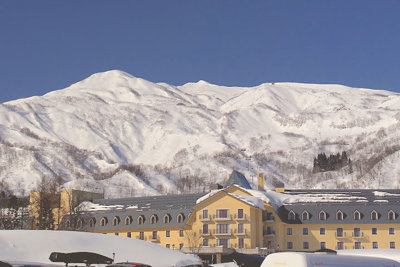
You will stay in Akakura Onsen village and the word which always springs to mind is ‘ramshackle’, but with heaps of atmosphere. Over the Summer and Autumn months when I have visited on contracting trips, it could justifiably be described as downright dilapidated. It’s only when the deep snow lining its one main street that its charm and character is revealed. Indeed, it’s almost pretty! Without the ‘chocolate box’ contrivance of Nozawa Onsen admittedly, but pretty nonetheless.

This is a ski village which could only exist in Japan, nowhere else in the world, and this sense of ‘place’ stands it apart from Niseko, Hakuba, Rusutsu and countless other purpose-built Japanese ski resorts. Akakura Onsen village (which ‘is’ Myoko Kogen – the ski resort) is a real village, with locals, with a community, with a soul and not without a huge amount of appeal. It may be low-tech, provincial, and lack any sophistication….but this is rural Japan, and its utterly authentic. And this is why, as a long term Japan-o-phile, I genuinely love it here. This is proper Japan and its all the better for it.

That’s not to say you will feel abandoned and stranded in an impenetrable old-world Japan – not at all. They are well-used to their foreign visitors over the winter months, with many Australians now owning and operating much of the ski infrastructure – the ski hire companies, the guides and even several of the hotels. But here it is as well as the locals, not instead of.  We have not totally taken over (yet!) – the local influence remains strong. It is perfectly accessible for Western guests – English menu’s, pizza and burgers if you wish, cappuccino’s and flat whites in the morning – but it also still caters to its largely local community with rambunctious izakayas, squid ink noodles and heritage local sake.

Why would most Japanese want to visit Myoko Kogen (notwithstanding the skiing)? Well, …..

…Onsens

This is a hot-spring region, one of the finest in Japan, as five hot spring sources sit at the foot of Mount Myoko drawing their water from deep within the mountain with different spring qualities and effects (apparently). The colour of the hot springs is also unique - in addition to the transparent hot springs, you can experience three different colours: the milky white Tsubame hot springs, the reddish brown Seki hot springs, and the black coloured Ikenotaira hot springs. All I know is that after a day on the ski mountain, coming back to my accommodation and enjoying a long, relaxing soak in one of the many Myoko’s many onsens is one of life’s little ‘moments’.

All hotels and ryokans have an onsen. For Japanese, that is the reason for coming here – perhaps with a little bit of skiing on the side.

So – there you go. Myoko Kogen. It’s awesome.

Our customers rate us 'Excellent'

4.9 / 5

Would recommend Different Snow to everyone

Different Snow organised a tailor made holiday for my wife and I, visiting the snow monkeys, a ride on the bullet train, a short stay in Tokyo and 10 days skiing in Hakuba / Arai, both amazing resorts and plenty of snow. Excellent hotels, all transfers etc and even arranged last minute changes to our itinerary at our request that were dealt with happily and efficiently, nothing was too much trouble for them.

Trevor  ·  United States

We had a trip of a lifetime holiday

Different Snow presented us with an excellent itinerary to suit our budget and accommodated specific requests. We had a whistlestop tour of Tokyo followed by great powder skiing in Hakuba then a cultural exploration of Kyoto. A fascinating and rewarding trip!

S Macquaker  ·  Scotland

Meticulous in preparation and so knowledgable

We are about to take our third trip to Japan organised by Different Snow, which says it all. The itinerary and planning has always been faultless and we have had the best times travelling stress-free. I would 100% recommend Different Snow to anyone considering travelling to Japan either to ski or just to explore.

Mark  ·  U.K.

Please visit our Trustpilot page to read the full reviews.

Begin your journey
How to book

It's pretty straight forward. You simply need to take the first step by getting in contact with us...

Contact

Give us a call, or fill in the enquiry form, or send us an email. We’ll listen, give advice and make suggestions.

Itinerary

We create a tailor-made itinerary proposal and email this to you. Together, we then refine it until it is just as you want.

Deposit

A 20% deposit secures the booking. The balance payment is not due until 10 weeks before departure.

Travel Pack

We post out your comprehensive travel pack, which also includes all our local contacts and our invaluable ‘How To…’ guides.

Ask a quick question

Email address
Name
Your Question

Secure and Encrypted

By clicking this button I agree with the collection and processing of my personal data as described in the Privacy policy.

This site is protected by reCAPTCHA and the Google Privacy Policy and Terms of Service apply.